
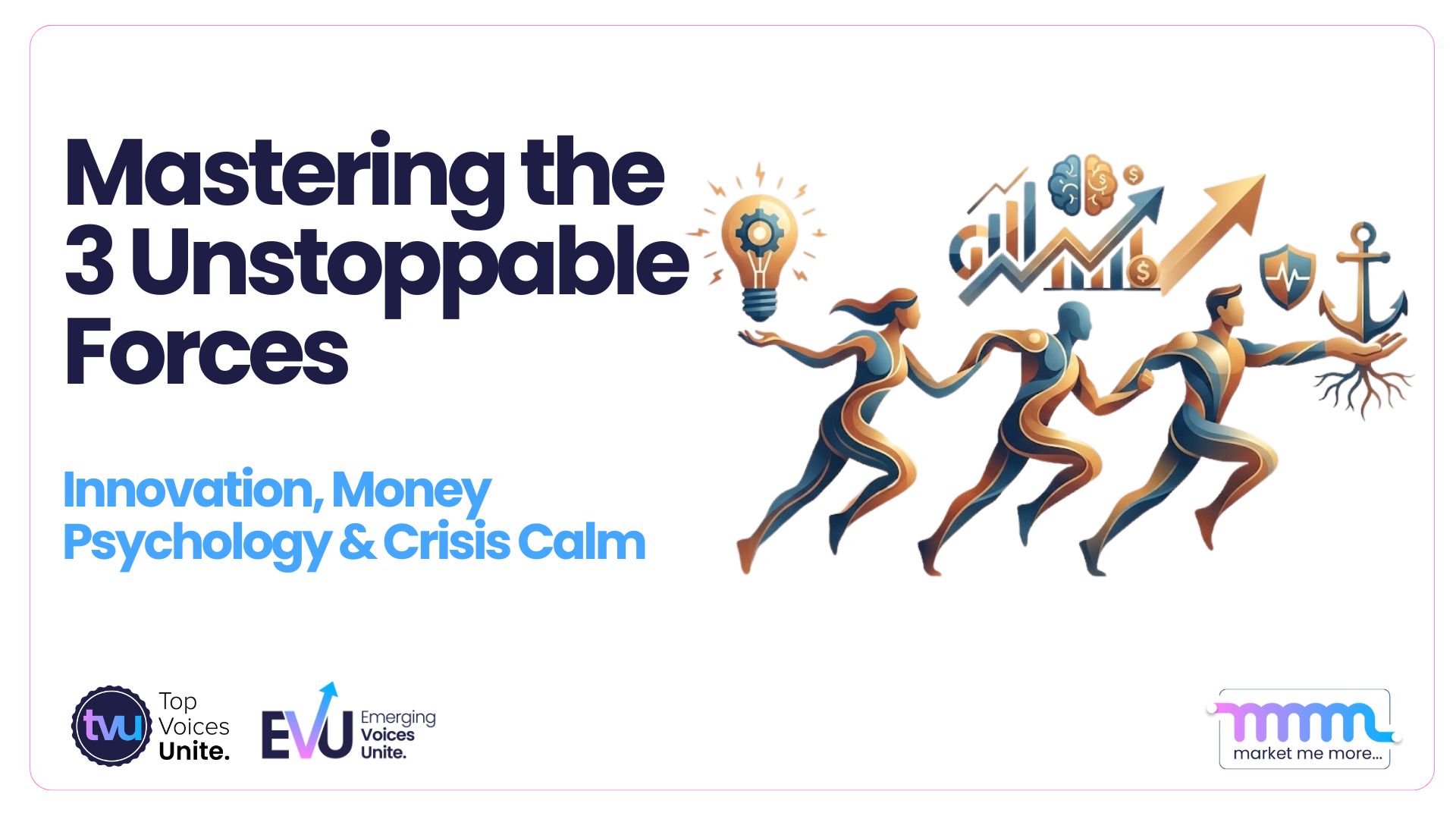
Mastering the 3 Unstoppable Forces
Early January carries two quiet but powerful reminders:
World Introvert Day (Jan 2) invites us to honor reflection, solitude, and the inner spaces where clarity is formed. Introverts thrive on deep thinking, careful listening, and thoughtful action—strengths that are often overlooked in louder spaces but absolutely critical to leadership.
International Thank You Day (Jan 11) reminds us that appreciation (spoken or unspoken) has the power to strengthen relationships, deepen loyalty, and transform workplace culture.
Together, these two celebrations ask an important question in our recent Friday poll:
How do you restore your energy and express gratitude?
Cast your vote, engage, & get featured!
Stay tuned until the end of this newsletter to catch our last week’s poll result about the new year’s resolution focused on this year by the majority of our Linkies!
But aside from our latest poll topic, here's a deeper question emerging for leaders in 2026: How do you create unstoppable momentum when the world is defined by disruption, emotional volatility, and unforeseen crises?
This edition of Top Voices Unite brings three unstoppable forces together—forces that will define leadership in 2026 and beyond. You'll discover how to escape the iteration trap, master the emotions that derail financial decisions, and cultivate the calm that keeps teams aligned in crisis.
============================================================
How to Escape the Iteration Trap: 4 Ways Leaders Can Create New Value in 2026
Global executive surveys from BCG and McKinsey show that innovation is widely viewed as critical to growth—yet fewer than one in ten leaders are satisfied with their organization’s innovation performance.
That massive gap isn't a failure of strategy. It's a failure of mindset—one that confuses iteration with innovation and optimization with transformation.
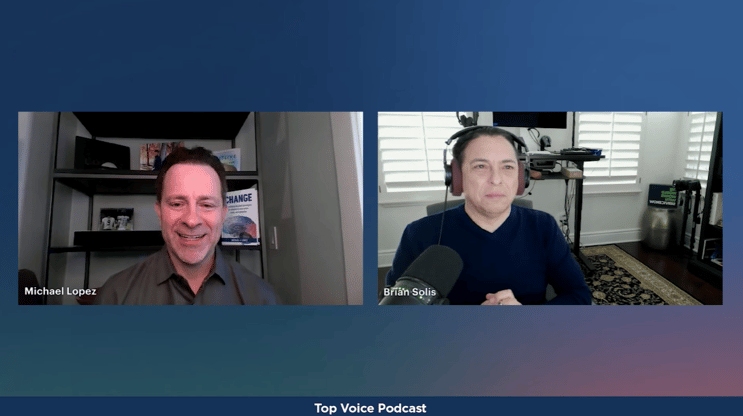
In this week's Top Voice Podcast episode, Brian Solis, Global Head of Innovation at ServiceNow and author of Mind Shift, sits down with Michael Lopez to unpack what innovation truly means in an era defined by disruption, artificial intelligence, and unprecedented uncertainty.
Solis framed the conversation early with a definition that challenges everything leaders think they know:
"Innovation is anything new that creates new value."
That simplicity is deceptive. It immediately shifts the conversation away from technology, speed, or disruption—and toward mindset and vision.
Why Most Leaders Are Stuck: The Iteration Trap
Here's where most organizations stumble: they call iteration innovation.
Solis explained it this way:
"Iteration is doing what we did yesterday better—cheaper, faster, more efficiently at scale."
Iteration adds incremental value. You release a software patch. You improve a process. You make tweaks based on user feedback. It's necessary. It's disciplined. It's also insufficient on its own.
Innovation, by contrast, is creating entirely new value that didn't exist before. It's not about making the current product better—it's about asking whether the current product still matters. It's rethinking foundational problems. It's identifying problems customers don't even know they have.
When companies get stuck in the iteration trap, they optimize yesterday instead of creating tomorrow. On a long enough time horizon, problems emerge that iteration alone cannot solve.
The Cost of Mistaking Iteration for Innovation:
Research from Harvard Business Review and McKinsey shows that efficiency-driven strategies eventually hit diminishing returns—gains flatten, margins compress, and competitors catch up.
Michael added the essential business insight:
"Innovation without a business model is just an invention."
Iteration requires execution. Innovation requires vision + execution. Without the business model, innovation remains an interesting idea instead of a transformative force.
The Mindshift: From "Aha Moment" to "Oh Moment"
Solis introduced a framework that separates leaders who thrive from those who scramble:
There's the "aha moment"—the moment when you first notice a shift in the market or a new possibility emerging. And then there's the "oh moment"—the moment when disruption arrives and you're already behind.
"Most organizations wait until the oh-moment, when they're already behind. By then, the competitive advantage has shifted."
The aha moment is a window of opportunity. Leaders who act during the aha moment are the ones who shape their industries. Leaders who wait until the oh moment are the ones reacting to disruption instead of driving it.
This is why mindset matters more than tools.
Michael connected this directly to leadership behavior:
"We're very good at having answers. What we're not always good at is finding better questions."
Leaders stuck in iteration mode have answers. They know how to improve the product, streamline the process, and satisfy the customer with incremental gains. Leaders driving innovation ask questions:
- What if the customer's actual problem is completely different from what they're asking for?
- What if our market is being disrupted by forces from outside our industry?
- What assumptions have we been operating under without questioning them?
Solis introduced a critical insight from his research:
"Only 10% of people are actually self-aware."
Without self-awareness, leaders default to past experience—even when the future demands something different. The ability to adopt a beginner's mind, to notice signals others ignore, is what separates innovators from optimizers.
Building an Innovation Culture That Survives 2026
When asked how leaders can scale innovation across their entire organization, Solis was clear: strategy alone isn't enough.
"Culture isn't a poster or a memo. Culture is a human operating system."
Culture is a future-motivating state—one that aligns people around where the organization is going, not just what it has done. It's the difference between a team executing a plan and a team willing to question the plan itself.
This requires:
- Dedicated teams with protected time — Space to explore without immediate ROI pressure
- Permission to question assumptions — An environment where "why are we doing this?" is encouraged, not discouraged
- A leader's humble recognition — As Solis put it: "The best leaders are humble enough to recognize they don't know what they don't know."
- Focus as a leadership tool — Michael reinforced: "What you stare at gets bigger. Where you choose to focus matters."
Innovation Culture Impact:
Teams in innovation-driven cultures are significantly more likely to engage in creative problem-solving and risk-taking. (Google re:Work & Harvard Business Review)

Your Challenge: Make the Mindshift
Solis closed the conversation with a grounded reminder that innovation isn't reserved for genius inventors:
"You don't have to be an inventor to be an innovator. Innovation is accessible to everyone—it starts with creating new value in how you think and how you work."
The more you allow yourself to think in the unknown, the more you start to see what you couldn't see before. In a year where disruption is becoming the norm, the real differentiator won't be technology alone—it will be leaders willing to open their minds before the market forces them to.
Your 3-Question Framework for 2026:
- Where am I iterating when I should be innovating? (What's the incremental improvement masquerading as transformation?)
- What aha moments am I ignoring? (What signals am I dismissing as irrelevant?)
- Who on my team is thinking in the unknown? (How do I create space for that thinking?)
Replay + Resources
📺 Watch the Full Episode of “The 2026 Mindshift: How Leaders Innovate in an Age of Uncertainty”
- On LinkedIn
- On YouTube
Join the next episode of Top Voice Tuesday with Valerie Martinelli on January 13 at 12:00 PM EST on LinkedIn Live. Register here!
📬 Get the most of the insights from our featured Top Voices in this episode!

→ Company Website: ServiceNow

→ Blogs
→ Grab a copy of Brian’s published books here!


→ YouTube Channel: Michael J. Lopez
→ Purchase his book “CHANGE” on Amazon!
======================================================
The Behavior Gap Nobody Talks About: Why Smart Investors Still Panic-Sell (And How to Stop)
If money decisions were purely logical, most people would already be financially secure.
Yet even highly educated, well-informed individuals panic during market swings, procrastinate on important planning, or second-guess themselves at critical moments.
Behavioral finance research from Dalbar shows that the gap between what investors know and what they actually do costs them several percentage points per year in returns. That's not a product failure. That's a behavior failure.
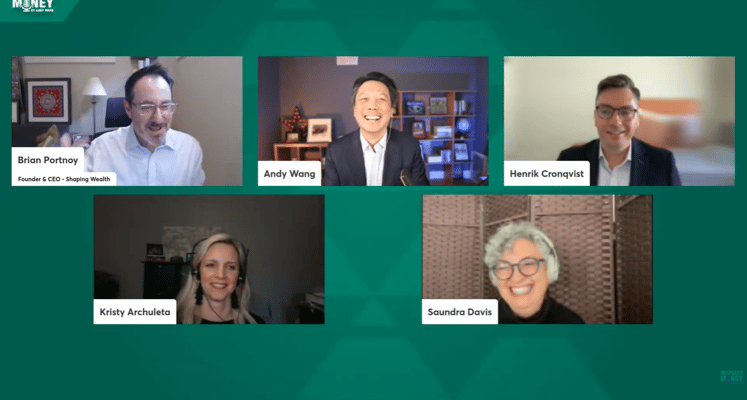
This week's Inspired Money livestream brought together leading voices in behavioral finance, financial therapy, and coaching to unpack a core truth: money decisions are driven less by spreadsheets and more by psychology, emotion, and deeply ingrained stories about what money means.
Hosted by Andy Wang, the panel included:
- Brian Portnoy (Shaping Wealth)
- Saundra Davis (Sage Financial Solutions)
- Dr. Kristy Archuleta (University of Georgia Financial Planning)
- Henrik Cronqvist (Chapman University)
The Real Problem: Comparison Culture and Financial Fear
Andy opened with a direct challenge:
"If money decisions were purely logical, why do smart, well-informed people still panic, procrastinate, or second-guess themselves when it matters?"
Fear, greed, urgency, and old money stories often take over precisely when stakes are highest—during volatility, major life decisions, or persuasive financial pitches. These aren't character flaws. They're evolutionary responses that once protected us but now undermine us.
Portnoy, behavioral finance expert and founder of Shaping Wealth, highlighted how comparison culture intensifies this problem:
"Nothing corrupts one's financial judgment more than the sight of your neighbor getting rich... and now everybody is your neighbor."
With constant exposure to curated success stories on social media, individuals are more likely to:
- Chase performance (buying high when others are winning)
- Abandon long-term plans (because someone else's strategy looks better right now)
- Take risks that don't align with their actual goals (because fear of missing out overrides their judgment)
Social comparison has been shown to increase risk-taking behavior, especially during bull markets, contributing to the classic buy-high, sell-low pattern that devastates long-term wealth. (Harvard Business Review)
Why Self-Awareness Is the First Financial Skill
Saundra, financial coach and executive director of Sage Financial Solutions, reframed emotional responses as information, not flaws:
"These survival responses are not character flaws. These are normal parts of our personhood."
Rather than suppressing emotion or trying to override it with willpower, the panel emphasized learning to:
- Recognize urgency when it shows up (both external and internal)
- Slow the body's stress response through breathwork or pause
- Bring rational thinking back online before acting
This is why financial therapy works. Techniques such as breathwork, pause rules, and somatic awareness are shown to reduce impulsive decision-making and improve financial follow-through.
How the Body Signals Financial Stress
Dr. Kristy, professor of financial planning at University of Georgia, explained that emotional money reactions often appear physically before we recognize them mentally:
"You can feel your hands getting sweaty... your extremities are cooling off because your blood is rushing to the center of your body. That's our fight-or-flight response."
These physical cues—tightness, urgency, discomfort, the urge to act quickly—are early warning signs that a decision is being driven by emotion rather than intention.
Neuroscience research shows that recognizing bodily stress signals early improves decision quality across high-pressure situations, including financial choices. (National Institute of Mental Heath)
When you notice the physical signs, you can pause, breathe, and ask: "Is this my fear talking, or my strategy?"
The Real Edge: Systems Beat Willpower Every Time
Henrik, behavioral finance scholar at Chapman University Argyros, reframed biases as evolutionary traits rather than defects:
"Sometimes the best thing you can do is to do nothing."
He emphasized building speed bumps—delays, automation, and structural barriers—into financial systems to counter our natural action bias.
Because here's the truth: Willpower is unreliable. Systems are predictable.
Examples that work:
- Investment policy statements created during calm moments (before emotion shows up)
- Automatic enrollment in retirement accounts (removes the decision from emotions)
- Passive investing structures that eliminate the urge to trade
- Cooling-off rules before major financial decisions (forced pause = better outcomes)
- Pre-mortem exercises that imagine failure before it happens (prepares the mind)
The Evidence Is Overwhelming:
- Automatic enrollment, default savings, and passive investing structures have dramatically increased long-term wealth outcomes over the last 25 years. (The Nobel Prize)
- Investors who rely on rules-based systems experience lower stress and higher long-term participation in markets than those who rely on intuition alone. (Vanguard)
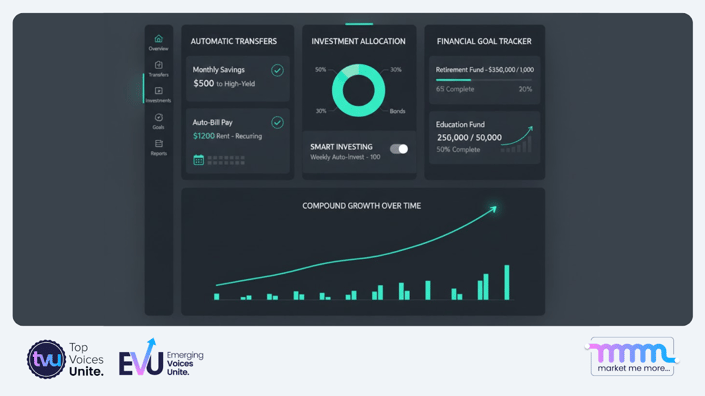
Alt Text: "Digital dashboard showing automation tools, checkmarks, consistent growth charts over time”
One Insight to Carry Forward
Andy closed the episode with a grounded reminder that cuts to the heart of the matter:
"The real challenge with money is not that we don't know what to do. It's that in emotional moments, our brains take shortcuts."
The edge isn't stronger discipline—it's designing decisions before emotion shows up.
Your Action Plan (Try This Week):
- Choose one financial decision on your mind.
- Name the emotion attached to it. (Fear? Urgency? Shame? Greed?)
- Identify the story you're telling yourself. (What belief is driving this emotion?)
- Add one pause or rule that future-you can rely on. (A waiting period? A second opinion? Automation?)
That small shift can change everything.
Replay + Resources
📺 Watch the full episode of this week’s Inspired Money
- In LinkedIn
- In YouTube
Join the next episode of Inspired Money on LinkedIn and YouTube Live! Stay tuned.
🔎 Explore more from our Inspired Money host and panel of experts in this episode!
→ Company Website: Shaping Wealth
→ Company Website: Sage Financial Solutions

→ Company Website: University of Georgia Financial Planning

→ Company Website: Chapman University Argyros College of Business & Economics
→ Company Website: Runnymede Capital Management
→ YouTube Channel: Subscribe here!

→ Free 3-minute Financial Plan: Calculate your Retirement Income
=========================================================
3 Moments That Revealed Real Leadership (When Everything Went Wrong)
Pressure doesn't announce itself politely.
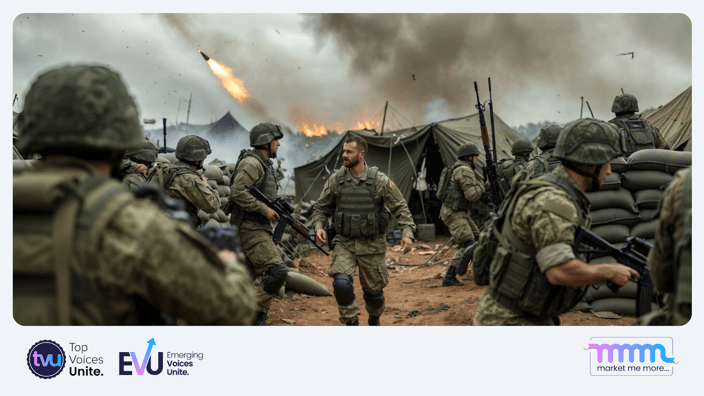
It arrives fast, emotional, and often unfair. It shows up in a submarine at periscope depth. It shows up when your team is calling you every name under the sun. It shows up when rockets are landing outside your tent in "Rocket City."
This week's Life Lessons Learned series pulled back the curtain on what leadership actually looks like when plans collapse, trust erodes, and danger is real—not theoretical.
Across multiple deployments, near-mutiny moments, and life-threatening emergencies, Tim Dickey—former naval officer, military leader, and now executive at Improving—shared a consistent truth:
Leadership isn't proven when things go right. It's revealed when everything goes wrong.
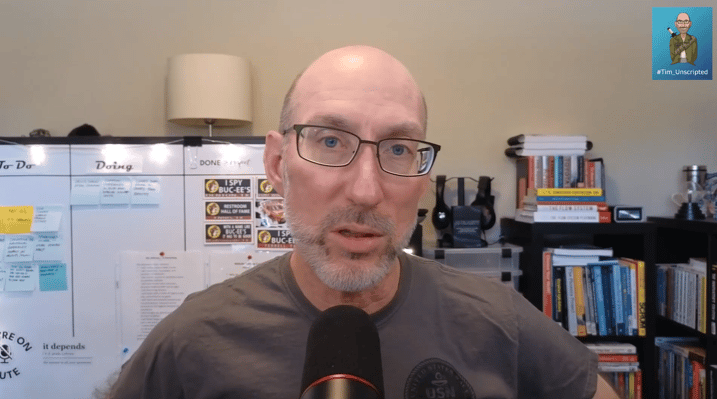
Moment 1: Nearly Having a Mutiny—When Emotional Readiness Breaks Before Strategy
During his first deployment to Afghanistan, Tim believed that clear success metrics would be enough to keep his team aligned. They weren't.
This wasn't feedback delivered politely. It was a confrontation.
In that moment, Tim faced a choice: respond with defensiveness, authority, or emotion—or choose strength. He chose strength:
"In front of the team, I kept a calm, cool and collected persona... But behind closed doors, I broke down in tears."
Strength isn't the absence of emotion. It's choosing where emotion belongs. In front of the team, he regulated himself. Alone, he processed it fully. The team saw his composure. His breakdown was for him to process, not for them to manage.
Why This Matters:
Research from the Center for Creative Leadership shows that most leadership derailments stem from emotional intelligence failures—not lack of skill or expertise.
The lesson: When your team is in crisis, they're not looking for your answers. They're looking for your calm. They need to know the leader is steady.
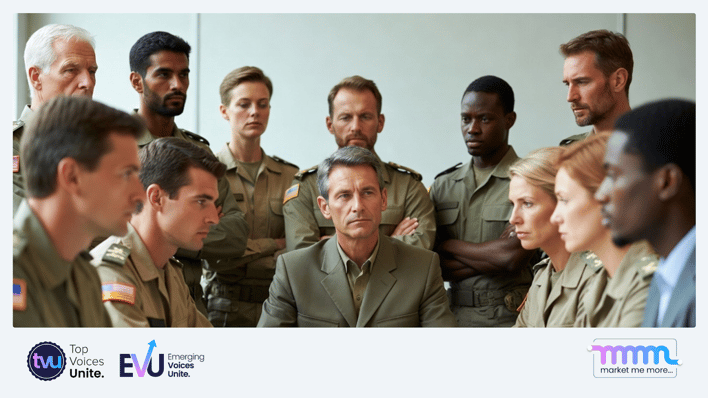
Moment 2: Sinking 100 Feet in Seconds—Why Training Beats Talent
While operating a submarine in the Strait of Gibraltar, Tim experienced a sudden and violent environmental event that changed the trajectory of his leadership.
The danger wasn't hypothetical. A submarine isn't a place where panicking is an option. But panic didn't show up.
And here's the line that defines everything about crisis leadership:
"You don't rise to the occasion—you sink back down to your training and preparation."
Crisis doesn't ask for creativity. It demands reflex. And reflex is built through preparation, not talent.
Under acute stress, decision quality deteriorates rapidly. Harvard Business Review research shows that only leaders with pre-trained responses and rehearsed decision frameworks maintain accuracy when pressure peaks.
In that submarine, every person had practiced emergency procedures hundreds of times. When the crisis arrived, they didn't think—they responded from muscle memory. Training has become a reflex.
Why This Matters:
The teams that survive crises aren't the ones with the smartest people. They're the ones with the best preparation. As a leader, your job is to ensure your team has practiced the worst-case scenarios before they arrive. Drills aren't boring. They're life-saving.
The lesson: Invest in preparation relentlessly. When a crisis arrives, it's too late to build muscle.

Moment 3: Surviving Rocket City—Calm Is a Tactical Advantage
Some environments never feel safe. You operate anyway.
FOB Shank, Afghanistan, was known as "Rocket City" because daily attacks were routine. One morning, a rocket landed close enough to rip through a tent.
The first leadership move wasn't strategy. It wasn't a brilliant tactical decision.
It was Presence.
One by one, checking in. Showing that the leader was there. Demonstrating calm in the face of actual danger.
And the takeaway was unmistakable:
"You can't prepare for every emergency... but you can respond quickly... calm under pressure."
Why This Matters:
Gallup research shows that teams led by emotionally steady, regulated leaders demonstrate greater resilience and recover faster after critical incidents. Calm doesn't minimize danger. It minimizes chaos.
When a leader panics, the team panics. When a leader stays steady, the team has a chance. Psychological safety—the foundation of effective teams—is built by leaders who demonstrate composure when pressure is highest.
The lesson: Your emotional regulation is a tactical asset. Calm spreads. Panic spreads faster.
The Throughline: What Real Leadership Demands
Across every story, one pattern holds:
- Teams take emotional cues from leaders
- Crisis exposes preparation gaps instantly
- Calm is contagious—panic spreads faster
- Strength is often invisible but always felt
Leadership isn't loud. It's steady.
And when pressure peaks, the question isn't "What should I do?"
It's "What have I trained myself to be?"
Your Challenge for 2026
If everything went sideways tomorrow:
- Would your team feel your confidence—or your fear?
- Have you practiced the worst-case scenarios?
- Do your people know you'll be steady when they need it most?
That answer is shaped long before the moment arrives.
Replay + Resources
📺 Watch these series in YouTube:
Catch next week’s Life Lessons Learned in Tim Unscripted in YouTube!
📬 Get most of the insights from Tim!

→ Company Website: Improving
 → YouTube Channel: Tim Dickey
 =========================================================
Why These Three Forces Matter Together
You might wonder: What do innovation, financial psychology, and crisis leadership have in common?
- Innovation requires a mindset that can tolerate uncertainty. Most leaders can't, so they iterate instead.
- Financial success requires emotional regulation that resists panic. Most investors can't, so they sell in fear.
- Crisis leadership requires preparation and calm that comes from practicing the worst. Most teams won't, so they panic in pressure.
All three demand the same thing: self-awareness, discipline, and the willingness to think differently.
This is the 2026 mind shift.
Not more tools. Not faster execution. Different thinking.
=========================================================Last Week's Poll Results: Community Shout-Out
Last week, we asked:
"What will your New Year's resolution focus on in 2026?"
The results are in—and our community spoke loudly:
📊 Poll Results:
- Professional Goals: 60% (The clear winner!)
- Personal Growth: 20%
- Health & Wellness: 20%
A special thanks to these Voices who voted and engaged:
This is what a community looks like. When you engage—whether through voting, commenting, or sharing—you're part of a movement of leaders committed to growth, accountability, and lifting each other up.
See the full conversation on LinkedIn
===================================================Stay Connected to What Matters Most
Want more weekly strategy breakdowns like this?
- Subscribe to Scaling My Impact for weekly recaps and standout moments from our Top Voices Unite livestreams.
- Register for our weekly Market Me More newsletter to learn more from our Voices community, industry experts who teach on technology, sustainability, leadership, and go to market strategies, and how these affect the future of work.
Build your voice.
Expand your reach.
Lead with substance.