
What Do Sales, Leadership, and Fitness Reveal About Growth?
Some leadership insights arrive through strategy sessions or boardroom discussions.
Others come from quieter moments—when a deal stalls unexpectedly, when a leader reflects on their own growth, or when a simple habit reveals how progress really happens.
This week’s Scaling My Impact edition brings together four conversations across the Top Voices Unite ecosystem that highlight how leaders navigate uncertainty, strengthen relationships, and build momentum through intentional habits.
From enterprise sales strategy to naval leadership lessons, from self-leadership to sustainable fitness transformation, each discussion reminds us that impactful leadership is rarely about speed—it’s about clarity, discipline, and consistency over time.
💡 Stay tuned until the end of this newsletter to catch our last week’s poll result about which communication trait our community admires most in women leaders.
What Does Silence Really Mean in Enterprise Sales Conversations?
Enterprise deals rarely fail in dramatic fashion.
More often, they simply slow down—or go quiet.
In this BlueTV conversation on March 12, 2026, Denise Murtha Bachmann speaks with enterprise sales strategist Mark Phinick to explore why high-value B2B deals stall and how experienced sales leaders respond when momentum disappears

Rather than assuming rejection, Mark explains that silence often signals something happening internally within the buyer’s organization—discussions around budget, ownership of the decision, or uncertainty about the business impact.
Understanding those internal dynamics allows sales leaders to support decision-makers and keep deals moving forward without damaging trust or long-term relationships.
How to Navigate Quiet Enterprise Deals
Silence often reflects internal uncertainty rather than rejection.
“Silence is armor. Silence is safety.” — Mark Phinick
When enterprise deals go quiet, it often means buying teams are still evaluating the importance of the problem or determining who truly owns the decision. Recognizing this helps sales professionals approach the situation with patience and strategic follow-up rather than pressure.
Belief in a solution does not equal decision authority.
“Belief is not authority.” — Mark Phinick
A champion inside the organization may believe strongly in the solution but lack the authority to approve it. Successful sales leaders help these champions build the internal case for change so executives can confidently make the final decision.
Champions move deals forward behind the scenes.
“Companies don’t make decisions in front of salespeople.” — Mark Phinick
Internal advocates often play the most important role in advancing enterprise deals. Providing them with the right messaging, business case, and supporting information increases the likelihood that they can successfully influence leadership discussions.
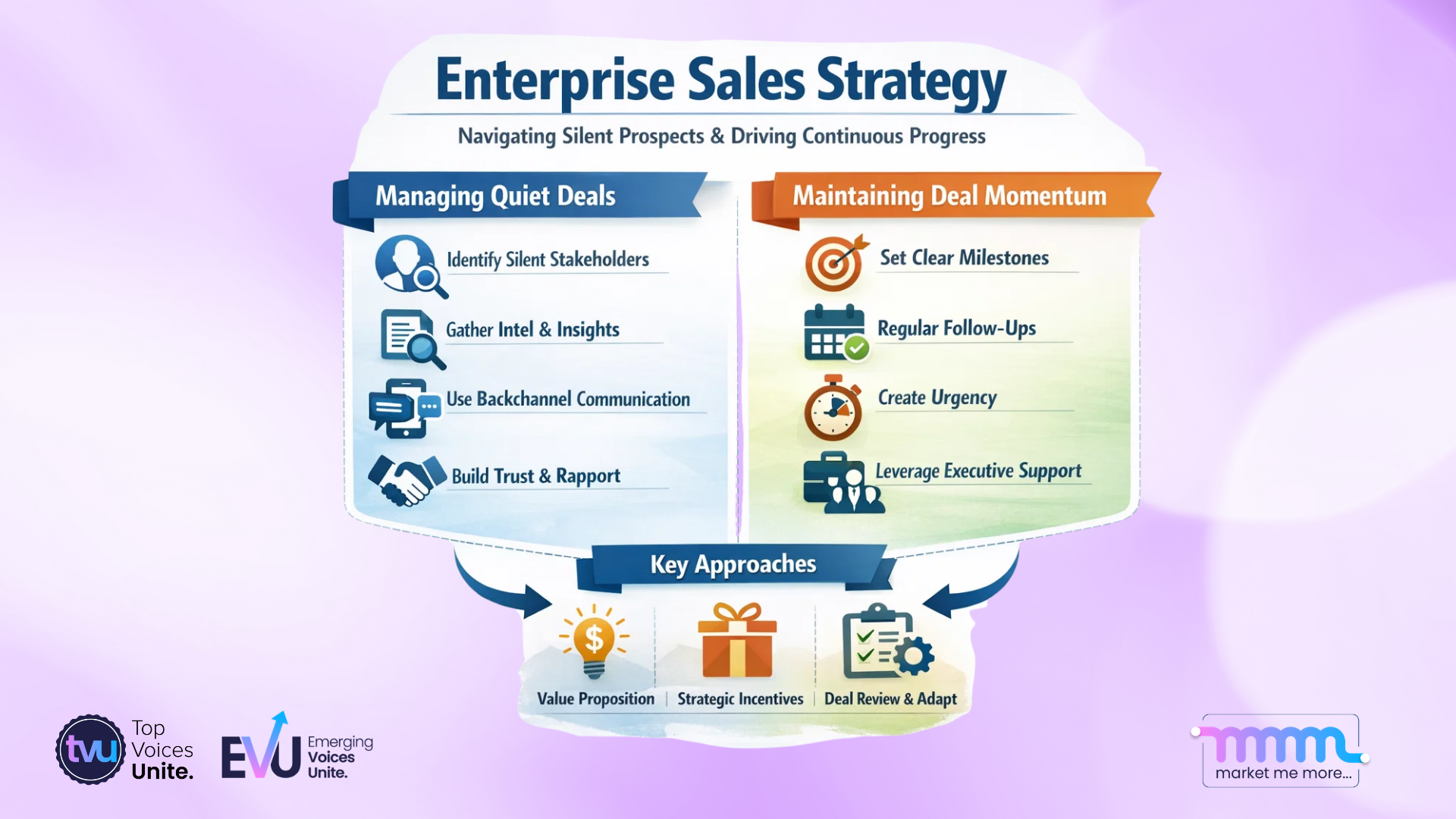
How to Keep Momentum When Deals Go Quiet
Always Schedule the Next Meeting
One of Mark’s simplest strategies is ensuring every meeting sets up the next step.
“Sales cycles are like billiards—every shot sets up the next one.” — Mark Phinick
Scheduling follow-up meetings in advance prevents momentum from disappearing between conversations.
Seek Clarity Instead of Applying Pressure
When communication slows down, pushing harder can damage relationships.
Instead, Mark recommends respectful clarity.
Short, empathetic messages—such as acknowledging that it may not be the right time—often prompt honest responses and keep the relationship intact.
Watch for Buying Signals
Even quiet deals often reveal signals that decisions are forming:
- New stakeholders joining discussions
- Financial or resource questions
- Champions asking for help explaining the solution internally
These signs indicate the organization may still be evaluating the opportunity.
Watch the Full BlueTV Conversation
Catch the full replay of this episode to hear Mark Phinick and Denise Murtha Bachmann break down enterprise deal dynamics and practical strategies for improving deal conversion.
In LinkedIn: When Enterprise Deals Go Quiet: What’s Really Happening Inside Buying Teams
In Youtube: When Enterprise Deals Go Quiet: What’s Really Happening Inside Buying Teams
🔗 Connect with Mark Phinick if your team has a strong pipeline but struggles to convert deals into revenue, Mark offers coaching for founders, sales leaders, and enterprise sellers.
Visit: https://www.letsmakeitrain.net/
🔗 Follow Denise Murtha Bachmann to stay updated on future BlueTV conversations featuring experts across leadership, sales strategy, and emerging technologies.
How Do Focus and Real-World Pressure Shape Leadership Lessons?
Leadership lessons often emerge from experiences where focus, discipline, and adaptability are tested.
In this Life Lessons Learned series recorded across March 9, 11, and 13, 2026, Tim • • Dickey reflects on moments from his Navy career that shaped his leadership philosophy.
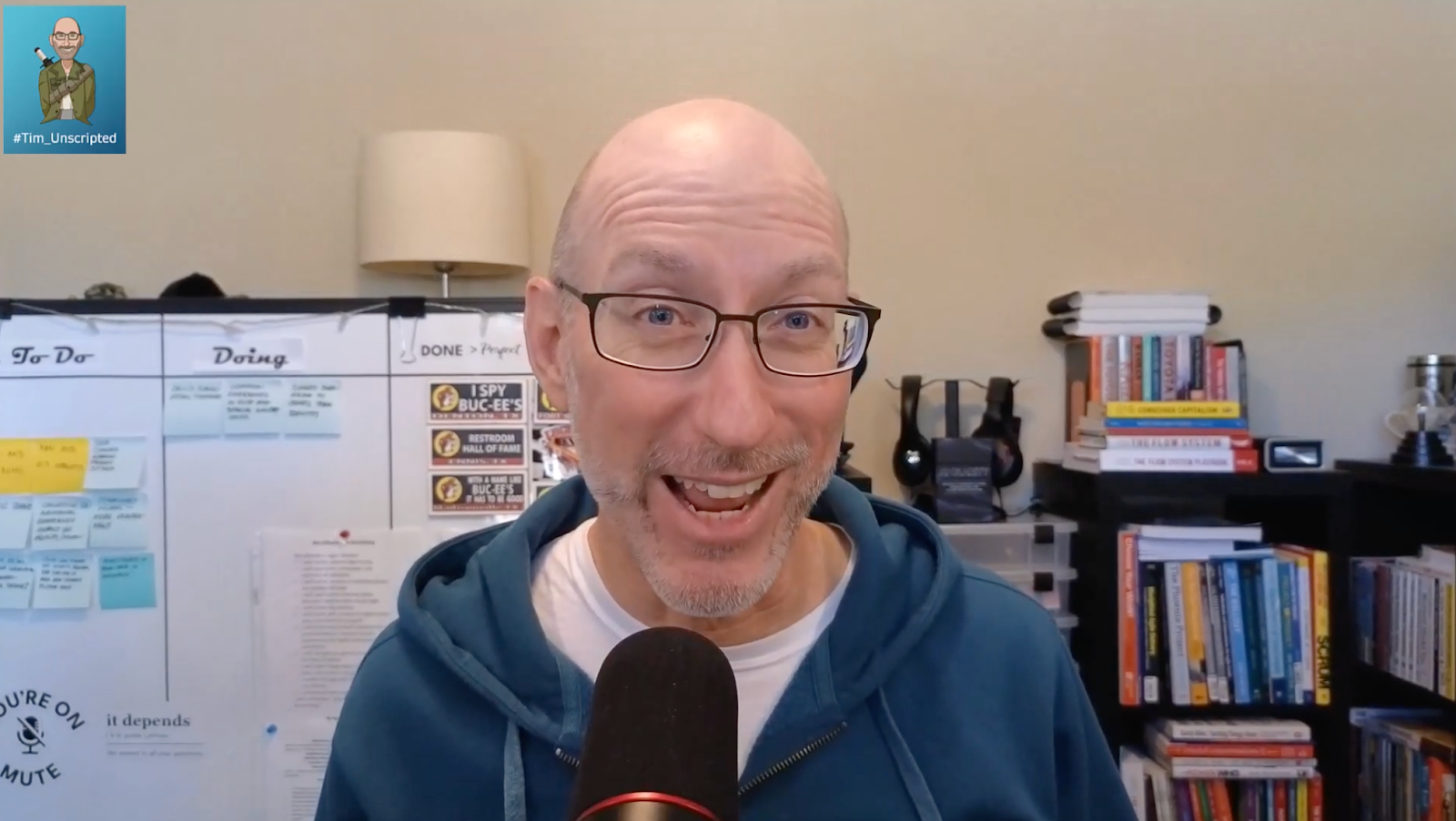
Through stories about submarine qualification, team responsibility, and unexpected moments during deployment, Tim highlights how leadership often develops through persistence and the willingness to learn from real-world challenges.
The three episodes collectively demonstrate that effective leaders combine focus, empathy, and adaptability to guide teams through complex situations.
How Do Navy Experiences Shape Powerful Leadership Lessons?
Focus on the main objective accelerates growth.
“Being hyper-focused like a laser builds trust and credibility.” — Tim • • Dickey
Tim describes how concentrating intensely on submarine qualification helped him achieve a demanding milestone faster than expected. That level of focus not only accelerated personal growth but also built credibility with colleagues and superiors.
Leadership requires looking out for your people.
“Leadership is about looking out for people when they can’t look out for themselves.” — Tim • • Dickey
Great leaders recognize when team members face personal challenges and step in with support. Addressing those situations with empathy strengthens trust and helps teams perform better in the long run.
Adaptability strengthens leadership impact.
“Being able to improvise and think on your feet is a huge asset.” — Tim • • Dickey
While strong planning is essential, leaders must also adapt when circumstances change. The ability to adjust quickly and make thoughtful decisions helps teams navigate uncertainty more effectively.
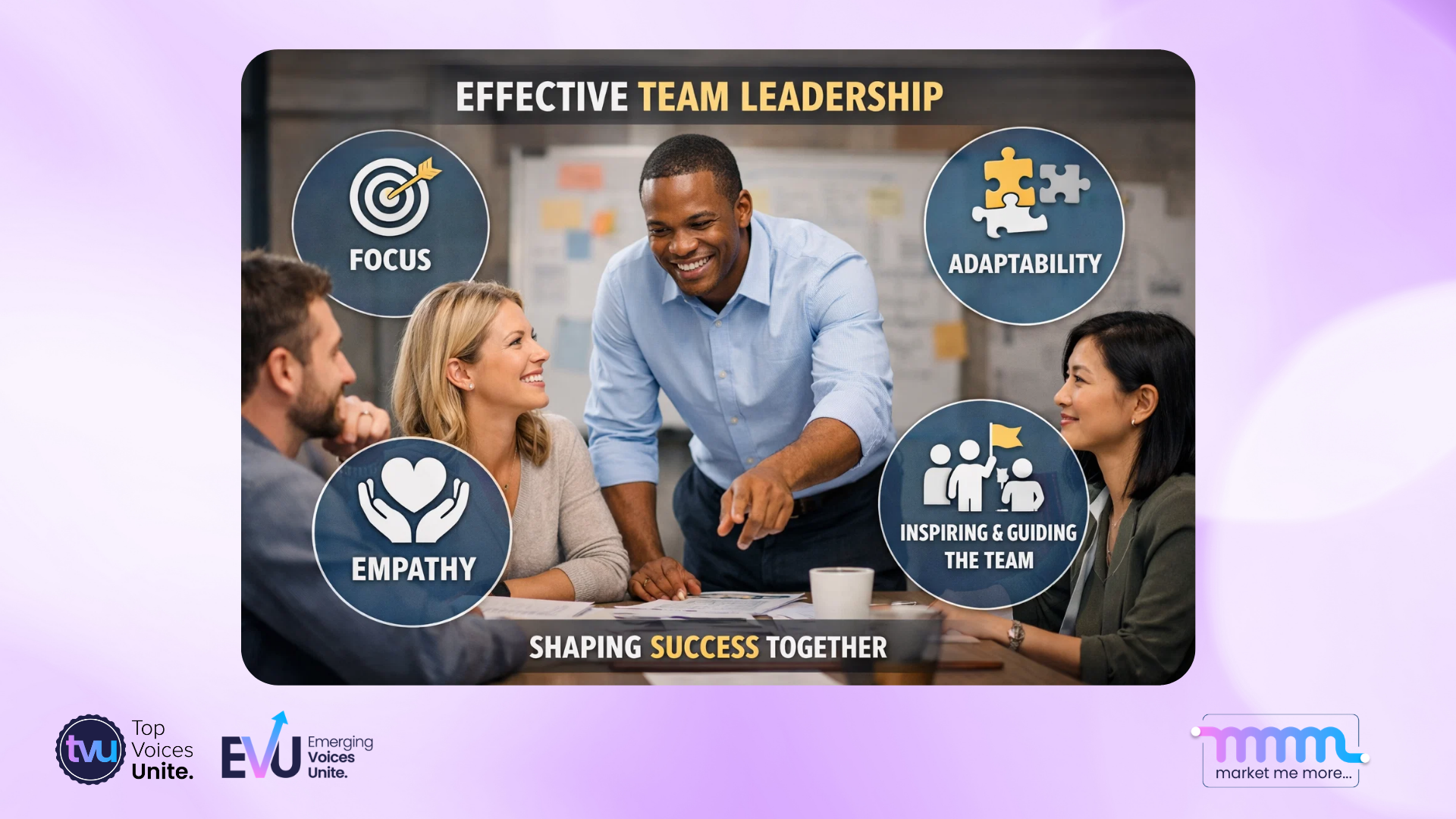
How Focus, Empathy, and Adaptability Shape Leadership
Each episode highlights a different dimension of leadership:
- Focus helps leaders prioritize what matters most.
- Empathy strengthens trust and team performance.
- Adaptability allows leaders to respond to change and uncertainty.
When combined, these qualities create leaders who are capable of navigating complex situations while still supporting the people around them.
As Tim emphasizes, leadership is not just about accomplishing tasks—it’s about earning trust, building credibility, and helping others succeed.
Watch the Full Series here:
📺 Laser-like Focus on the Main Thing
🔗 Follow Tim • • Dickey on LinkedIn
Tim regularly shares leadership reflections from real-world experiences, offering practical lessons for professionals navigating growth and change.
Why Does Self-Leadership Matter Before Leading Others?
Leadership is often measured by external outcomes—titles, promotions, or visible success.
But in this People Behind the Post conversation on March 12, 2026, Jose Kiggundu and leadership coach Eric Bell explore a different perspective: the importance of self-leadership.
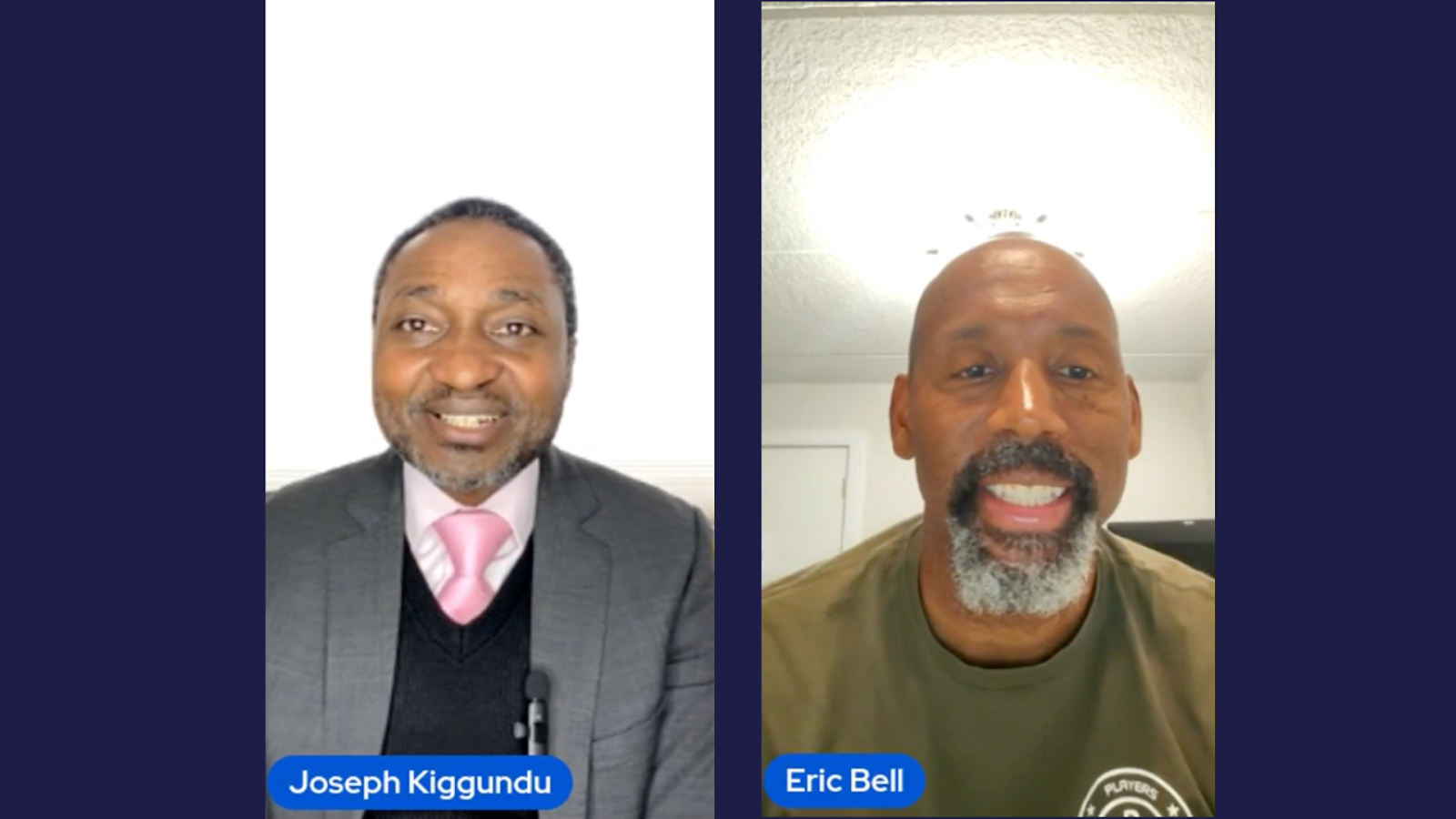
Eric argues that sustainable leadership begins with reflection, emotional awareness, and daily commitment to personal growth. Leaders who invest time in understanding their own mindset and behaviors are better equipped to guide others.
The discussion highlights how self-awareness, discipline, and consistent reflection create leaders who are more resilient and effective over time.
How Self-Leadership Shapes Sustainable Growth
Leadership begins with self-awareness.
“Self-awareness and self-reflection are the biggest keys to personal growth.” — Eric Bell
Leaders who take time to evaluate their actions and decisions gain a clearer understanding of how they influence others. This awareness allows them to grow intentionally rather than reacting to circumstances.
Leadership is a daily practice.
“Leadership is something you have to contribute to every day.” — Eric Bell
Eric emphasizes that leadership is not defined by a single moment or title. Instead, it develops through daily habits of reflection, discipline, and improvement.
Emotional discipline strengthens decision-making.
“You have to separate your feelings from your actions.” — Eric Bell
While emotions provide important signals, effective leaders learn to respond thoughtfully rather than react impulsively. This separation helps leaders maintain clarity during challenging situations.
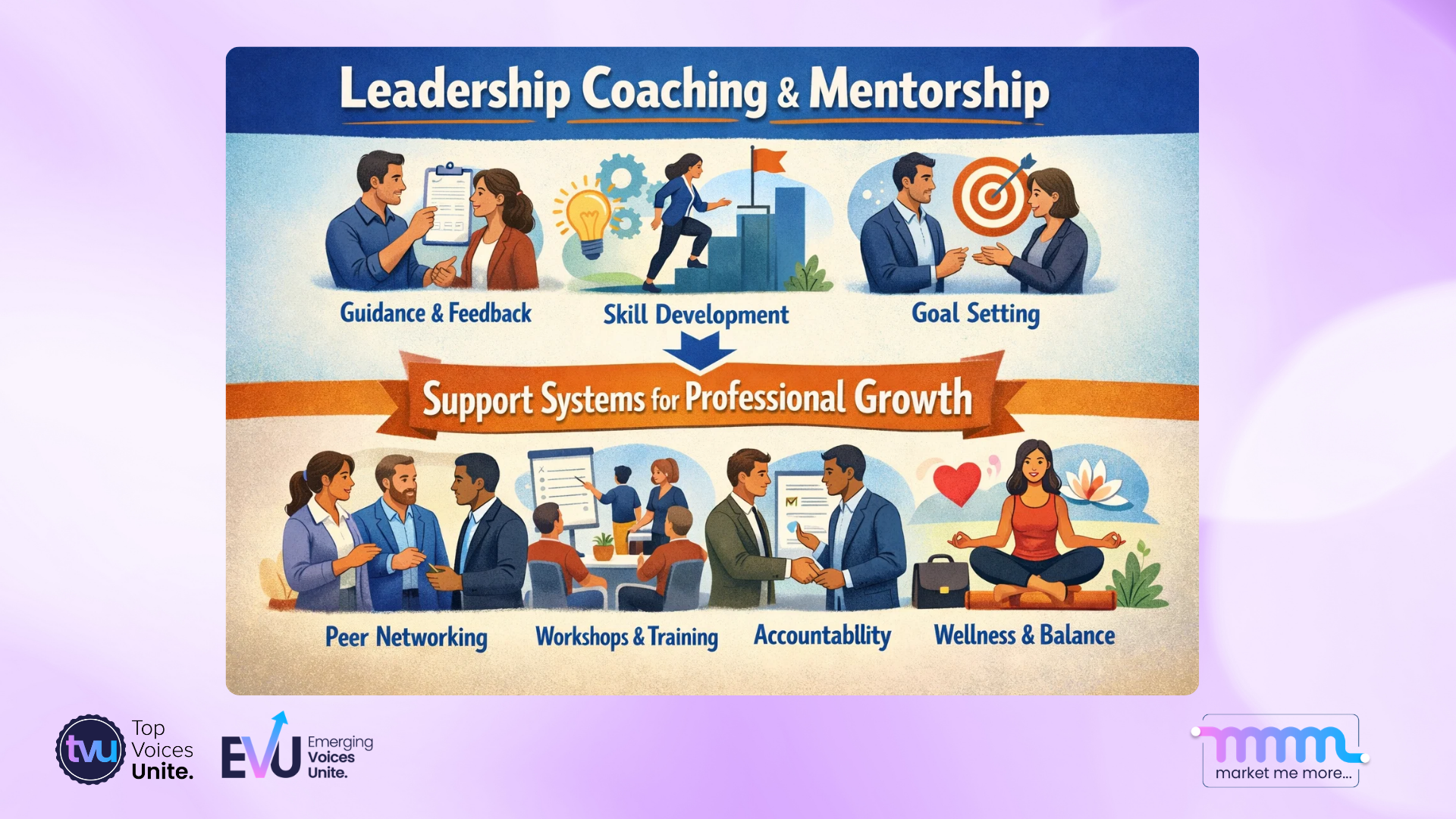
Why Coaching and Support Systems Matter
Another important insight from the conversation was the value of external guidance.
Just as athletes rely on coaches to improve performance, leaders benefit from external perspective.
Coaches help identify blind spots, refine strategies, and accelerate growth.
Eric Bell challenges the outdated idea of the “self-made” leader.
Even the most successful individuals rely on teams, mentors, and support systems to reach their potential.
Continue the Conversation
📺 Watch the LinkedIn replay: https://www.linkedin.com/events/7437592344805363712/
🤝 Follow Jose Kiggundu for more People Behind the Post conversations exploring leadership, growth, and real-world lessons from professionals across industries.
🌱 Connect with Eric Bell to learn more about his work in leadership development, coaching athletes, and his upcoming curriculum focused on mental health, leadership, and performance in sports.
Why Do Most Fitness Transformations Fail?
Health transformations often promise rapid results—but lasting change rarely happens overnight.
In this Top Voice Podcast conversation recorded March 13, 2026, Michael Lopez and nutrition scientist Joseph Munoz explore why many fitness transformations fail and what actually creates sustainable progress.
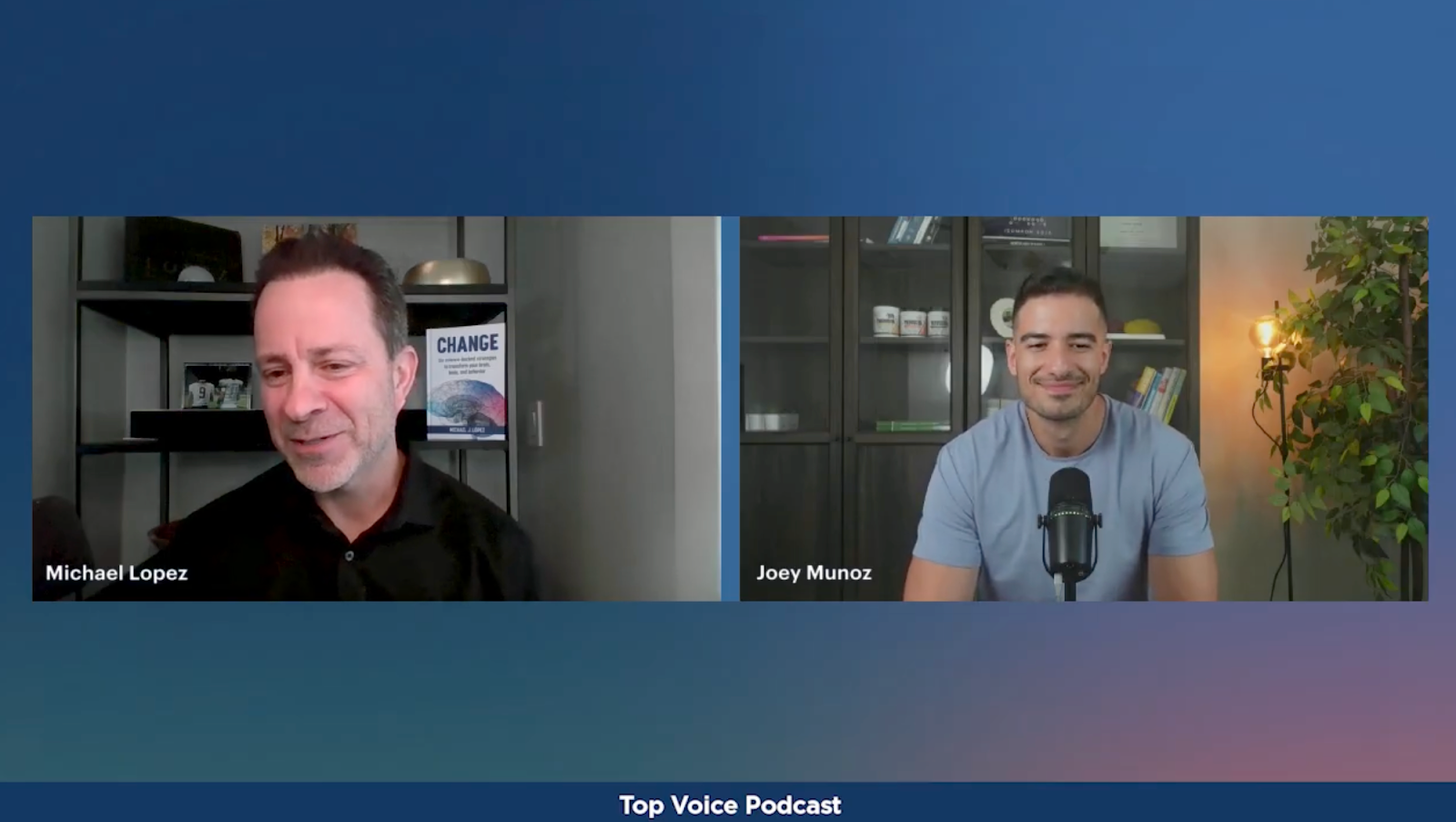
Dr. Munoz explains that successful health changes are built on habits, identity shifts, and consistent routines rather than restrictive diets or short-term motivation.
The discussion highlights how small daily behaviors gradually reshape both results and identity, leading to long-term success.
How Sustainable Fitness Actually Works
Habits drive long-term outcomes.
“The outcomes are a delayed reflection of your daily habits.” — Dr. Joseph Munoz
Rather than focusing on short-term results, successful transformations begin with small behaviors repeated consistently. Over time, those habits produce meaningful physical and mental change.
Consistency matters more than perfection.
“The only thing we’re measuring early on is consistency.” — Dr. Joseph Munoz
Early stages of transformation should prioritize building sustainable routines. When consistency becomes part of daily life, progress naturally follows.
Identity shifts sustain long-term change.
“Part of identity change is simply doing the work.” — Dr. Joseph Munoz
As habits improve, individuals begin to see themselves differently. That identity shift—from someone trying to be healthy to someone who lives that lifestyle—creates lasting transformation.
Why Slow Progress Often Leads to Better Results
Another important insight from the conversation is that real change takes time.
Many people attempt to compress years of lifestyle change into a few months.
Dr. Munoz reframes this expectation by helping clients understand the long-term payoff.
“Change is slower than people expect—but more rewarding than they imagine.” — Dr. Joseph Munoz
By celebrating small wins—such as consistent workouts or healthier meals—clients build momentum and confidence.
🎧 Listen to the Full Top Voice Podcast Episode
Hear the full conversation between Michael Lopez and Dr. Joseph Munoz ey Munoz on sustainable fitness, habit formation, and the power of identity in lasting transformation.
- Apple Podcasts: https://lnkd.in/dNm8YGup
- Spotify: https://lnkd.in/dk7WKJN4
- YouTube: https://www.youtube.com/watch?v=DipaswinA2A
👉 Join the next Top Voices Tuesday episode with John Harrison on March 17 at 12:00 PM EST on LinkedIn Live. Register here!
Connect with Michael Lopez on LinkedIn for more conversations with leaders, researchers, and practitioners exploring transformation, leadership, and the science of change.
Michael’s Top Voice Podcast continues to bring together experts across business, health, and personal development to explore what it really takes to create meaningful change.
Follow Dr. Joseph Munoz to learn more about evidence-based fitness, sustainable habit formation, and practical strategies for improving health and performance.
What Do These Leadership Conversations Teach Us About Consistent Growth?
Across these four conversations, one leadership principle consistently emerges:
Impactful leadership is built through focus, reflection, and consistent habits.
Whether navigating enterprise sales decisions, leading teams through complex environments, developing personal leadership discipline, or building sustainable health routines, progress rarely happens through shortcuts.
Instead, it grows through clarity, trust, and the willingness to improve every day.
Last Week’s Community Poll Result
In recognition of Women’s History Month and International Women’s Day, we asked our community:
Which communication trait do you admire most in women leaders?
🏆 Poll Result: 57% chose — Vulnerable storytelling
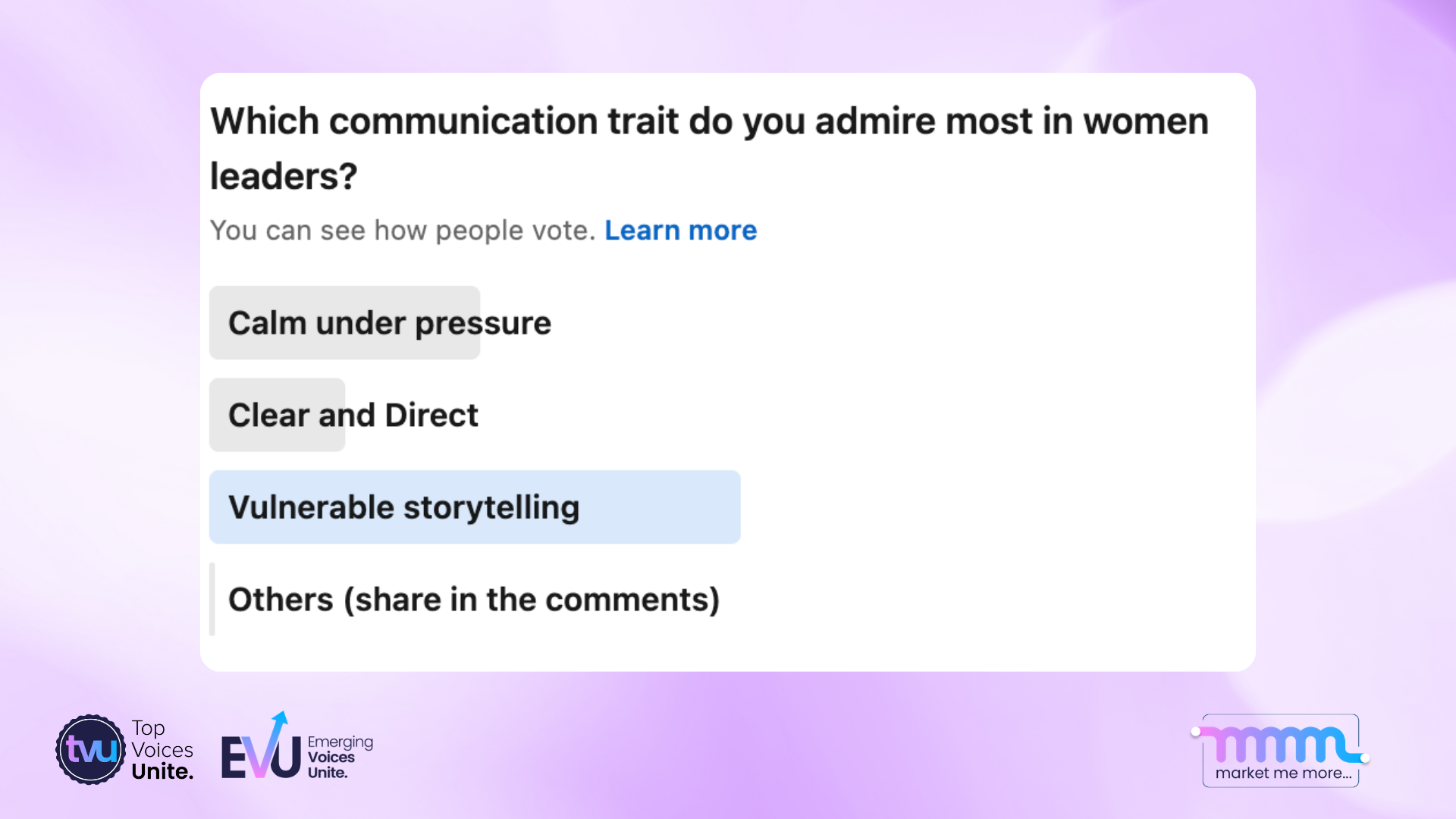 This result highlights how authenticity and emotional openness create powerful leadership influence.
💬 Special thanks to these Voices who voted and engaged:
- Anna Rooney
- Niña Grace Bulakiña, CHRA, RPm
- Robert Jaeger
- Jonathon Chambless
- Nikki Estes
- Jose Kiggundu
- Chenny Marie Cantano
Join the discussion here.
Stay Connected to What Matters Most
Want more weekly strategy breakdowns like this?
- Subscribe to Scaling My Impact for weekly recaps and standout moments from our Top Voices Unite livestreams.
- Catch our past livestreams with our Voices here in our YouTube channel.
- Register for our weekly Market Me More newsletter to learn more from our Voices community, industry experts who teach on technology, sustainability, leadership, and go to market strategies, and how these affect the future of work.
- Listen to our AI podcast team to get their insights on the events from this past week. They really focus in on the strategies discussed on navigating high stakes enterprise sales, building personal brands on LinkedIn, and fostering self-leadership.
Build your voice.
Expand your reach.
Lead with substance.