
Ready to Reset Your Impact for 2026?
Most professionals today feel like they are sprinting just to stand still.
Between market turbulence and the rapid rise of artificial intelligence, the old rules of "save and wait" no longer provide the security they once did, often breeding a sense of quiet desperation.
This 60th edition of Scaling My Impact brings together five world-class frameworks to help you move from financial apathy to active agency.
You will discover how to bridge the gap between building a product and leading a market, sync your leadership "clock" across global cultures, and use frameworks to stop being your company’s biggest bottleneck.
Stay tuned until the end to catch our Friday Poll results on what our community does first when a professional setback strikes!
Can 45 Global Experts Help You Move from Financial Apathy to Active Wealth Agency?
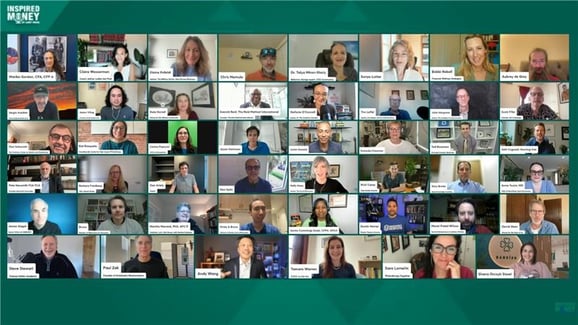
In the 100th episode celebration of Inspired Money, host Andy Wang convened 45 global experts to address the anxiety that a single misstep could derail a lifetime of effort.
The panel provided a collective roadmap for those ready to exercise real agency in their financial lives.
Strategic Takeaways:
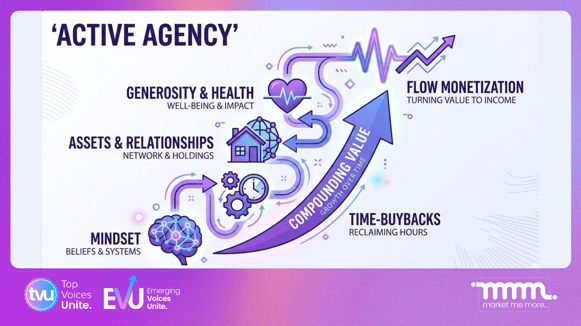
🔑 Price for Compounding: Wealth begins by "owning the craft" and negotiating from a position of strength to avoid the "compounding harm" of an undervalued starting point.
Gary Brode, Mariko Gordon, Claire Wasserman, Stefanie O'Connell, Everold Reid, Elaine Pofeldt, Tamara Warren, and Carina Popovici argue that setting a high baseline early is critical.
🔑 Partner with Your Nervous System: Dan Ariely, David Stein, Talya Miron-Shatz, Chris Mamula, Sonya Lutter, Amanda Clayman, Seth Cogswell, Tim Leffel, Ted Rossman, Bobbi Rebell, Martha Menard, and Shana Orczyk Sissel collectively identified that 80% of finance is managing your own psychology—your emotions, biases, and life story matter far more than the math. (Morgan Housel, The Psychology of Money, 2020)
To combat "anticipatory anxiety," they suggest identifying and accepting emotions before making decisions.
🔑 Automate to Emancipate: Kate Horrell, Steve Stewart, Jason Vitug, Jackie Cummings Koski, Barbara Friedberg, and Bryce Leung advocated for "set it and forget it" systems that buy back your time.
A powerful takeaway is Bryce Leung’s "diaper tree" concept: investing 25 times an annual recurring expense to generate a passive income stream that pays for that necessity forever.
🔑 Leverage Relationship Capital: J. Kelly Hoey, Sergio Avedian, Justin Donald, Dustin Heiner, Jason Hartman, and Rich Carey emphasized that your "network is your net worth.”
They recommend real estate as a "historically proven" tool for cash flow during market shifts.
🔑 Plan for Longevity: John Hargrave, Bruno Fierens, Paul Schervish, Anna Yusim, Kat Rosqueta, Paul Zak, Pete Neuwirth, Manel Pretel-Wilson, James Siegal, Sara Lomelin, Scott Fifer, and Aubrey de Grey explored how money serves a higher purpose once survival needs are met, noting that "generosity is a longevity strategy.”
🔑 Monetize Your Flow State: Your highest earning potential lives where a skill is easy for you but hard for others; identifying this allows you to stop reacting and start practicing real agency.
💡Did You Know?
Failing to negotiate a first salary can lead to a loss of over $600,000 during a 40-year career. (George Mason & Temple University, 2010)
Success in 2026 requires stopping the habit of reacting to market noise and starting the practice of exercising real agency through service, craft, and relationships.
Replay + Resources
📺 Watch the full replay of this Inspired Money episode:
Join the next episode of Inspired Money on LinkedIn and YouTube Live! Stay tuned.
🔎 Explore more from our Inspired Money host and panel of experts in this episode!
→ Company Website: Runnymede Capital Management
→ YouTube Channel: Subscribe here!
→ Free 3-minute Financial Plan: Calculate your Retirement Income
→ LinkedIn Newsletter: Inspired Money
Is Your Leadership Clock Synced with Your Global Team’s Reality?
Managing global teams often leads to mismatched expectations regarding punctuality or credit, which can erode trust faster than technical failures.
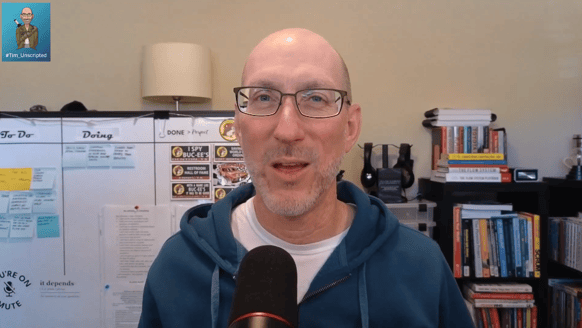
Tim Dickey shares insights from his transition from nuclear submarines to the multicultural cruise industry, teaching leaders how to manage culture from Miami to Finland.
Strategic Takeaways:
🔑 Budget for Cultural Adjustment: Recognize that your standard of punctuality is not universal. Tim explains:
"Many cultures take time as a relative measure, not a literal measure. So being a good leader... make sure that you budget for cultural adjustment.”
🔑 Bridge Gaps Through Active Listening: Effective leadership is rooted in empathy. Tim notes:
"Actively listen to build shared understanding around the person's culture... and ultimately figure out how to be complementary to them in the workplace.”
🔑 Give Credit (The Helsinki Shakedown): Real authority involves stepping back once a project—like a system installed in a cold Helsinki, Finland shipyard—is successful. Tim notes:
"When the spotlight shines, the leader should take a bow very quickly and step back... while the team steps in.”

💡Did You Know?
- 70% of international ventures struggle due to cultural misunderstandings rather than a lack of technical skill. (Harvard Business Review)
- Companies with culturally diverse leadership teams are 36% more likely to see better financial performance. (McKinsey & Company, 2020)
- 82% of employees feel their contributions are not properly recognized, leaving them disengaged and undervalued. (Gallup, 2026)
Real authority demands a shift in how you view time and team recognition to maintain harmony in global, multicultural settings.
Replay + Resources
📺 Watch this week’s Life Lesson Learned series in YouTube:
Catch next week’s Life Lessons Learned in Tim Unscripted!
📬 Get most of the insights from Tim!

→ Company Website: Improving
→ YouTube Channel: Tim Dickey
→ LinkedIn Newsletter: The Great Inversion
Is Your Business Narrative the Most Strategic Asset for Growth?
Most builders focus solely on the product, leaving their vision "trapped inside their head" and invisible to the market.
In this premier episode of Founder Education Series, Nikki Estes sat down with Anubhav Srivastava (Founder of VocaTales and UpTales) to discuss how to bridge the gap between building a product and leading a market.
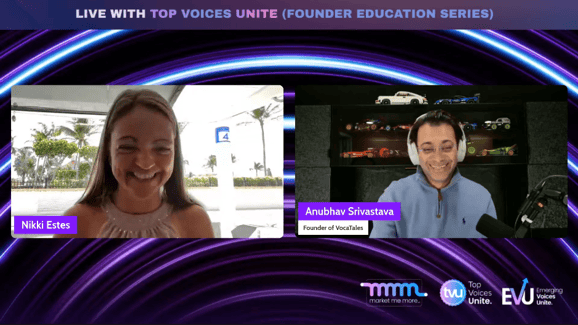
(Nikki Estes and Anubhav Srivastava appearing together for the premiere episode of Founder Education Series)
Strategic Takeaways:
🔑 Leverage the Creator Economy: The professional world is moving toward a creator-led model where founders are the primary storytellers.
🔑 How to Infuse Meaning into Visibility: Technology alone is not enough; true connection requires human empathy.
Nikki emphasizes the need for depth:
"I believe that if visibility lacks the narrative, then it's just noisy... We have to have some kind of meaning to it.”
Anubhav highlights the limits of automation:
“When it comes to the human emotions, the empathy, the love, the tenderness, the care, the sadness, the losses, I don't think, you know, AI can understand that."
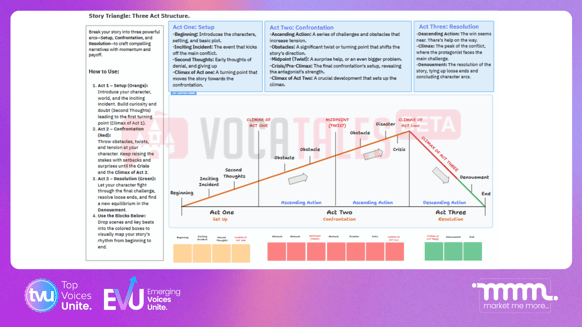
🔑 Use the QUE PASA Formula: To beat "blank page syndrome," founders should use RajNation’s method which stands for Problem, Approach, Solution, and Action to turn a complex vision into a tight elevator pitch.
💡Did You Know?
The global creator economy is projected to hit 400 billion this year and is on a path to reach 1 trillion by 2030.(Boston Consulting Group, 2025)
Success requires more than a good idea; it requires the tenacity to iterate your message until it is sharp enough to separate you from the crowd.
If you’re ready to strengthen how you communicate vision, conviction, and leadership through story, this is your next step.
Subscribe to VocaTales and use coupon code LAUNCH50 to get 50% off valid for 1 year!
Replay + Resources
📺 Watch the replay here:
🔎 Explore more from our Featured Voices here:
→ YouTube Channel: Scaling My Impact
→ Company Websites:
→ Subscribe to Nikki’s active newsletters!
Can Small, Lean Teams Outpace Corporate Giants in 2026?
While massive corporate projects grab headlines, they frequently fall flat.
Top Voice Podcast host Michael Lopez and John Harrison, co-founder of Luminark Global, Inc, discuss how today’s tools allow individuals to scale their influence through lean, effective teams.
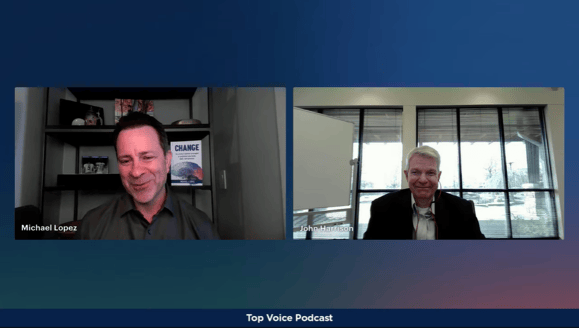
Michael Lopez and John Harrison together in Top Voice Podcast, discussing the shift from corporate to individual-led business change)
Strategic Takeaways:
🔑 Succeed Where Mergers Fail: Real impact often starts with just one or two people fixing a specific problem.
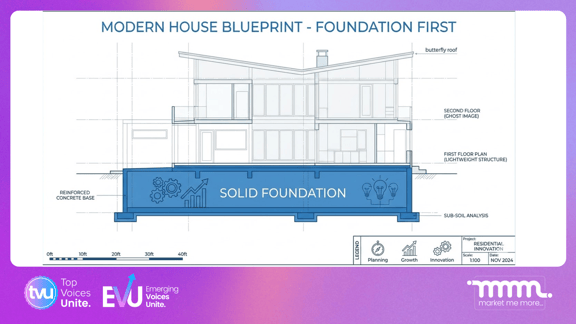
🔑 Build a Solid Foundation: Many firms adopt tools without a plan, leading to reports that 95% of AI projects fail to deliver economic return. (MIT Sloan & BCG, 2025)
John uses a house-building analogy:
"Even complicated projects require a solid foundation and a great plan before you start putting up the walls.”
🔑 Redefine Your Value: As automated output becomes cheap, professional worth is found in unique interpretation.
💡Did You Know?
- A staggering 70% of mergers and acquisitions fail to deliver the benefits promised at the start. (Harvard Business School / Fortune, 2024)
- There are now over 72 million independent workers in the U.S. alone.—nearly half the labor force. (MBO Partners, State of Independence 2025)
You must "initiate movement" by solving problems where the cost of living with them is higher than your solution.
Replay + Resources
📺 Watch the Full Episode of this week’s Top Voice Podcast
Join the next episode of Top Voice Podcast with Doug Kimball on March 10 at 12:00 PM EST on LinkedIn Live. Register here!
📬 Get the most of the insights from our featured Top Voices in this episode!
→ Company Website: Luminark Global, Inc
→ Newsletter: Friday Focus
→ YouTube Channel: Michael J. Lopez
→ Purchase his book “CHANGE” on Amazon!
Are You the Biggest Bottleneck in Your Own Company’s Growth?
Many founders believe working harder is the path to the next level, but the identity that built your business is often the thing preventing it from scaling.
In our People Behind the Post Series, host Jose Kiggundu and Bukie Adebóla-Ezeh explore the transitions required to move from operations to strategic leadership.

Strategic Takeaways:
🔑 Shift from Builder to Architect Real impact often starts with just one or two people fixing a specific problem. Bukie notes:
"The mindset that started the business... it's not the same mindset you will need to scale”
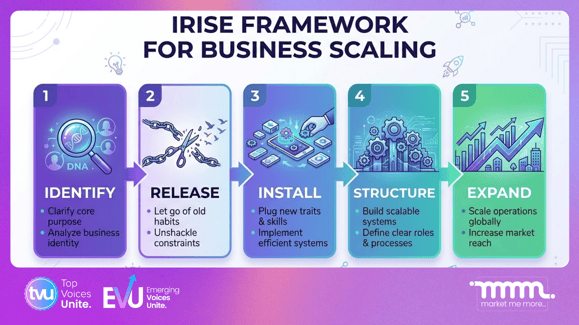
🔑 Use the IRISE Framework: This approach guides leaders to Identify survival identity, Release outdated roles, Install new traits, Structure systems, and Expand.
🔑 Count the Cost of Your Time: If a founder spends hours on tasks a team member could resolve in minutes, they are robbing their business of its strategist.
💡Did You Know?
- CEOs who excel at delegating generate 33% higher revenue than those who don’t—freeing them to focus on growth while their teams own execution. (Gallup, Inc. 500 study)
- 65% of high‑potential startups fail because founders can’t transition from “do‑everything” co‑founder to a delegated, role‑clear CEO—leading to irreparable co-founder conflict. (Harvard Business School / Noam Wasserman, The Founder’s Dilemmas)
Scaling your company without scaling your identity is the fastest way to hit a ceiling.
Replay + Resources
📺 Watch the full replay of “People Behind the Posts with Bukie Adebóla-Ezeh”
📬 Connect with our People Behind the Posts host & speaker for this episode!
→ Company Website: Bukie Signature Consulting Ltd
→ Purchase her book “NON-NEGOTIABLE” on Amazon!
→ YouTube Channel: Subscribe here!
Last Week’s Poll Results
We asked our community a critical question and the responses highlight the dual nature of growth and the internal work required to maintain momentum.
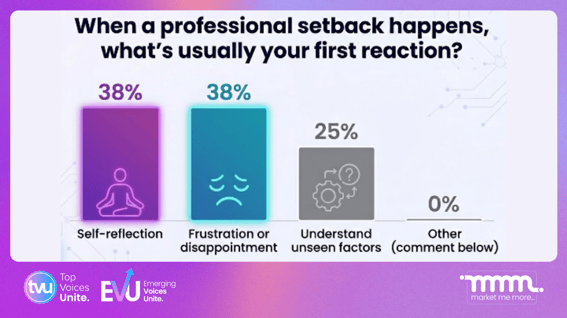
💡Collective Summary of Community Insights:
Our community conversation revealed a powerful consensus:
“A setback is not a stop sign, but a prompt for deeper ownership.”
💬 Recovering Momentum: Tim Dickey shared that while "gut reactions" are natural when caught off guard, practicing better responses to being "blindsided" helps recover momentum faster.
💬 The Accountability Lens: Nikki Estes emphasized analyzing how she could have better planned and executed the work, holding herself ultimately accountable for the outcome.
💬 Owning Your Skills: Clemont Nguyen pointed out that many professionals remain "stuck" not because of a lack of talent, but because they have yet to turn their expertise into "owned" leverage.
This balance relates directly to Bukie Adebóla-Ezeh’s lesson on the "Identity Trap"—where frustration with a plateau requires the self-reflection needed to Identify and Release an outdated builder identity to install a new architect mindset.
Special thanks to our Community Voices who engaged:
Clemont Nguyen🔸Nikki Estes🔸Tim Dickey🔸Anna Rooney🔸Premanand Coumaravelou🔸Vignesh Nagarajan🔸Jonathon Chambless🔸Dhairya Gautam
See the full conversation on LinkedIn
Stay Connected to What Matters Most
Want more weekly strategy breakdowns like this?
- Subscribe to Scaling My Impact for weekly recaps and standout moments from our Top Voices Unite livestreams.
- Catch our past livestreams with our Community Voices here in our YouTube channel.
- Register for our weekly Market Me More newsletter to learn more from our Voices community, industry experts who teach on technology, sustainability, leadership, and go to market strategies, and how these affect the future of work.
Build your voice.
Expand your reach.
Lead with substance.