
What Hard Lessons Are We Carrying Forward as January Comes to a Close?
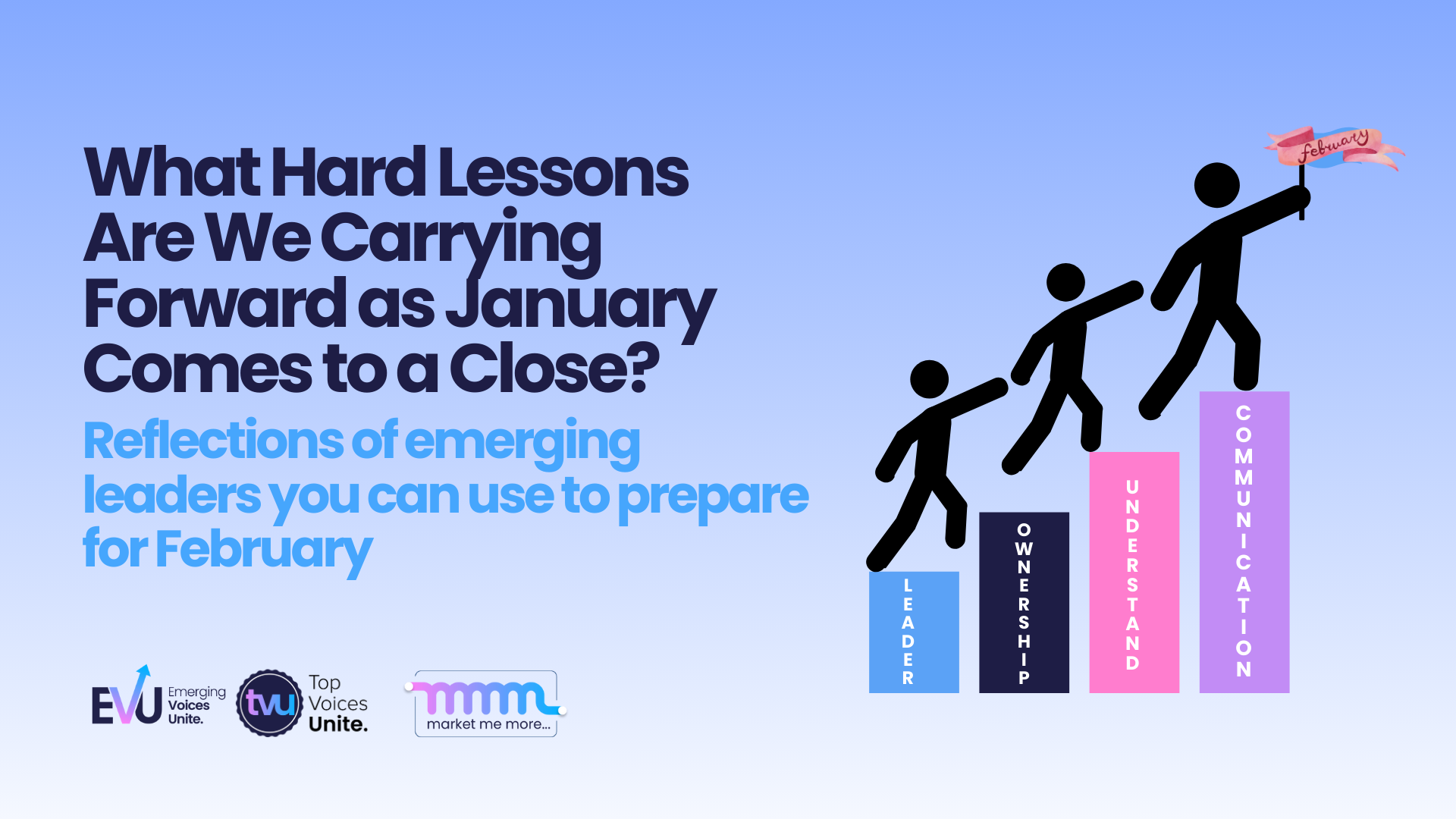
As we reach the final stretch of January, many of us are taking a quiet inventory. Not just of goals—but of lessons. Not just of plans—but of patterns we no longer want to repeat.
The first month of 2026 has already asked us to slow down, look honestly at our leadership, and decide what deserves to come with us into the next chapter.
This week at Emerging Voices Unite, the community leaned into that work—sharing the hardest lessons learned, reflecting on how those moments reshaped leadership behaviors, and practicing what it looks like to respond with intention rather than habit.
Here’s what surfaced.
What Happens When Leaders Name the Hardest Lesson They’ve Learned?

We opened the week with a simple but powerful invitation:
“The hardest lesson I learned in my career was…”
Not the polished lesson. Not the résumé-friendly one. But the lesson that took time to accept and quietly changed how leadership shows up day to day.
The response thread quickly became a space of real-time learning.
Robert Jaeger shared openly about learning, through painful feedback, that growth begins when we stop defending our self-image and start taking responsibility. His reflection underscored a truth many leaders learn late: listening without ego is a leadership skill.
In a meaningful exchange, Nikki Estes reflected on how trust—and who we trust for feedback—shapes growth. Robert’s response emphasized that the most effective feedback isn’t formal or performative. It’s consistent, human, and happens in the trenches.
These exchanges reinforced something research continues to validate:
Leaders develop most deeply through reflective sense-making—the process of examining experiences, questioning assumptions, and reframing perspective—not through titles or milestones alone.
Read the full conversation and add your reflection
📚 Further reading:
Which Leadership Behaviors Change First After a Hard Lesson?
Later in the week, we asked:
“When you think about the hardest lesson you’ve learned in your career, what leadership behavior did it shape most?”
The responses were clear—and telling.

Most Emerging Voices pointed to:
- How I communicate with others
- How I handle pressure
Hard lessons don’t just sharpen skills. They reshape how leaders listen, respond, and stay grounded when stakes rise.
Behavioral science supports this pattern: early reflection after difficulty strengthens self-regulation and decision quality, especially under stress.
Vote or add your perspective (poll still open)
What Changes When Leaders Pause Before Responding?
We closed the week with a practice—not a prompt.
- When a decision or conversation feels uncomfortable, don’t solve it immediately.
- Pause.
- Ask what the moment is asking of you as a leader.
- Then respond deliberately—not automatically.
This challenge reflected what many shared earlier: the hardest lessons often come from moments that can’t be rushed.
Research consistently shows that pausing before response increases emotional regulation, improves communication, and reduces reactive decision-making.
Share what you noticed after trying the challenge
How Are Emerging Voices Leading in Real Time?
Christopher G. Johnson
Stepping in as host for Morning Edition on Michigan Public, Christopher demonstrated calm, clarity, and presence in a role that sets the tone for thousands of listeners. Leadership isn’t always loud—sometimes it’s about steadiness when others need it most.
- Read the post here: Post | Feed | LinkedIn
- Connect with Christopher G. Johnson on LinkedIn: Christopher G. Johnson | LinkedIn

Ed McAndrew
Ed’s reflection on staying mentally “loose” reminded the community that progress isn’t built through grind alone. His emphasis on breath, presence, and small resets reinforced a powerful truth: staying present prevents overwhelm from becoming burnout.
Ed’s leadership shows that consistency isn’t rigid—it’s adaptable.
- Read Ed’s post here: Post | Feed | LinkedIn
- Connect with Ed McAndrew on LinkedIn: Ed McAndrew | LinkedIn
How Do Leaders Move From Awareness to Action Under Pressure?

We’re kicking off EVU Live: Ideas That Scale — Season 2 with Anna Rooney.
This conversation focuses on a challenge many leaders face: Insight is common. Follow-through is not.
On January 28, together with our guest Anna Rooney, we will explore:
- Why awareness alone doesn’t change behavior
- How decisions actually get made under pressure
- What commitment looks like when certainty isn’t available
👉 Save your spot here: From Awareness to Action, What Leaders Do After the Lesson
👉 Connect with Anna Rooney on LinkedIn: Anna Rooney | LinkedIn
How Are EVU and TVU Supporting the Next Generation of Speakers?
Top Voices Unite x Emerging Voices Unite has launched a new way for event organizers to find speakers who educate—not pitch.
This initiative connects hosts with leaders who bring real-world insight, clarity, and audience-first delivery to stages of all sizes.
👉 Explore the initiative: https://www.linkedin.com/feed/update/urn:li:activity:7419770795628978176
What Are You Carrying Forward Into February?
As January comes to a close, many of us are realizing that leadership isn’t shaped in the big moments alone.
It’s shaped in:
- How we accept feedback
- How we communicate under pressure
- How we pause before responding
- And how we choose presence over performance
If this first month of 2026 has taught us anything, it’s this: Hard lessons don’t weaken leadership. They refine it.
As we step into February, we invite you to carry forward what matters—and leave behind what no longer serves you.
🔔 Stay connected. Stay reflective. Stay human.
Emerging Voices Unite is where leadership is practiced, not performed.